Inflammation has become one of those health words that gets used to explain almost everything.
Your ankle is swollen.
Your finger is red.
You have a fever.
Chronic inflammation is different.
There may be no obvious redness or swelling that you can see from the outside. Instead, researchers look at immune cells, signaling molecules, and biomarkers in the blood or tissues to understand what is happening.
This is part of why the term “inflammation” can become confusing.
You can feel terrible without having some enormous amount of systemic inflammation.
And you can have measurable inflammatory markers without feeling anything unusual at all.
The two are not interchangeable.
Your immune system is supposed to be responsive
Your immune system is constantly deciding what needs attention and what doesn’t.
This is particularly important in your gastrointestinal tract.
Your digestive system is in constant contact with the outside world through everything you eat, drink, and encounter in the gut. The intestinal tract contains extensive immune tissue that helps maintain a balance between responding to genuine threats and tolerating food and the microorganisms that normally live there.
That’s a pretty remarkable job.
Your immune system can’t simply react to everything.
If it did, eating lunch would be a very different experience.
The goal is not to have an immune system that never responds.
The goal is an immune system that responds appropriately and then returns toward normal.
What does this have to do with food?
Quite a lot, but probably not in the way you see it described online.
Food is one part of the environment your body interacts with every day. What you eat can influence metabolic health, the gut microbiome, the intestinal environment, and many of the signals involved in immune function.
And dietary patterns do appear to matter.
For example, recent research continues to find that Mediterranean style dietary patterns are associated with improvements in some inflammatory biomarkers, including hs CRP and IL 6.
But this doesn’t mean that one particular food is “anti inflammatory” and another food is “inflammatory.”
That’s too simplistic.
Your overall diet, your metabolic health, your body composition, your activity, sleep, stress, medications, medical conditions, and many other factors can all influence inflammation.
Which brings us to the much more useful question: What does an anti-inflammatory way of eating actually look like?
That’s where things get practical.
And fortunately, it doesn’t require a refrigerator full of exotic superfoods.
If it feels like everything you eat causes a problem, it can be incredibly frustrating.
You eat something and you bloat.
You eat something else and you get diarrhea.
Another food causes constipation. Another gives you stomach pain. Another makes you feel nauseated.
Pretty soon, you have a list of foods you “can’t eat” that is getting longer and longer.
But why?
There isn’t one answer to this question. And despite how tempting it is to find one thing to blame, digestive symptoms are often the result of several things interacting with each other.
So let’s look at some of the possibilities.
Your gut has to do a lot of work
We tend to think of digestion as a pretty simple process: eat food, digest food, absorb nutrients, eliminate waste.
But your digestive system is doing all of that through a complicated combination of digestive juices, enzymes, muscles, nerves, hormones, immune cells, and microorganisms.
Food has to be broken down.
It has to move through your digestive tract at the right pace.
Nutrients have to be absorbed.
The gut has to distinguish between things that are harmless and things that need an immune response.
And your gut is constantly communicating with your brain.
So when something isn’t working quite right, the symptoms can show up in lots of different ways.
Motility matters
Your digestive tract is not just a tube that food falls through.
It has muscles and nerves that coordinate the movement of food from one end to the other. This is called gastrointestinal motility.
If things move too quickly, you may have diarrhea.
If they move too slowly, constipation can become a problem.
And sometimes the problem is not simply fast versus slow. The coordination of movement can be disrupted at different points along the digestive tract.
Motility problems can also contribute to bloating, abdominal discomfort, nausea, and the feeling that food is just sitting there.
This is one reason why the same food can seem perfectly fine one day and terrible another day. What is happening in your digestive system at the time you eat it matters.
Your gut may be more sensitive than it should be
Here’s another piece that is easy to miss.
Sometimes the problem isn’t that there is something terribly wrong with the food or even that there is an enormous amount of gas in your digestive tract.
It may be that your gut is more sensitive to what is happening inside it.
This is called visceral hypersensitivity.
For example, gas and stool are normal parts of digestion. Everyone has them. But people with disorders such as IBS can experience pain or significant discomfort from amounts of gas or stool that might not bother someone else.
This is one reason I don’t like the idea that digestive symptoms always mean, “This food is damaging me.”
Sometimes your gut is sensing something that is happening normally, but the signal is being experienced as much more uncomfortable.
And that doesn’t mean the symptoms are imaginary.
The symptoms are very real.
Your brain and your gut are talking all the time
This is another place where the old idea of “it’s all in your head” has done a lot of damage.
Your brain and your digestive tract are in constant communication. The gut has its own nervous system, and signals travel in both directions between the gut and brain.
That means stress, emotions, expectations, and the way the brain processes bodily sensations can influence digestive symptoms.
It also works the other way around. What is happening in your gut sends information back to your brain.
So if you have a gut that is already sensitive, being worried about what you eat can become part of the picture.
Maybe your motility is sluggish.
Maybe your gut is more sensitive.
Maybe certain carbohydrates are particularly difficult for you to digest or absorb.
Maybe there has been a change in your microbiome.
Maybe you have an underlying gastrointestinal condition that needs to be diagnosed and treated.
Maybe stress is amplifying symptoms that already have a physical cause.
Maybe several of these things are happening at the same time.
That is why I am much more interested in the pattern than in a list of supposedly “good” and “bad” foods.
What do you do when everything seems to bother you?
This is where I would resist the temptation to keep eliminating foods forever.
A short-term elimination can sometimes be useful. The low FODMAP diet, for example, can help some people with IBS identify dietary triggers. But it is designed to be followed by reintroduction and personalization, not indefinite restriction.
If your diet keeps getting smaller, I think it is time to step back and ask a bigger question: Why is my gut reacting to so many things?
That question may lead you to a very different solution than simply eliminating another food.
And sometimes the answer is not about finding the perfect diet at all.
Sometimes the goal is to help your digestive system become a little less reactive, understand what is actually triggering your symptoms, and gradually figure out what you can comfortably eat.
That’s a much more useful place to end up than being afraid of your next meal.
“I have a ton of food intolerances. I need to figure out what foods I can eat.”
I hear some version of this from new clients all the time.
They may have already eliminated gluten, dairy, onions, garlic, beans, certain fruits, grains, eggs, nuts, or a long list of other foods. Sometimes they have food sensitivity testing that has given them even more foods to avoid.
And often, the list keeps growing.
At first, it makes sense to think, Well, obviously, the problem is the food.
If a food makes you bloated, gives you diarrhea, causes stomach pain, or otherwise makes you feel terrible, why wouldn’t you stop eating it?
But there is an important question that can get missed: Why are so many different foods bothering you in the first place?
If you have one food that consistently causes a problem, maybe that food really is the problem.
But when you are reacting to 20 or 30 or 50 different foods, I start thinking about the digestive system itself.
That doesn’t mean the foods aren’t causing symptoms. They are. The question is whether the foods are the root cause of what is happening.
Your symptoms are real. The food may not be the whole story.
First, let’s clear up something important.
When I say that I want to look beyond the food, I am not saying your symptoms aren’t real.
If you eat a particular food and then become bloated and uncomfortable, you really did become bloated and uncomfortable.
And there are plenty of legitimate reasons a person may not tolerate a particular food.
Lactose intolerance is a good example. If you don’t produce enough lactase, the enzyme needed to digest lactose, eating too much lactose can cause gas, bloating, abdominal discomfort, and diarrhea. That’s a real food intolerance.
Food allergies are another matter entirely. A food allergy involves an immune response and can sometimes be dangerous. It is not the same thing as a digestive intolerance.
And conditions such as celiac disease are different again. Gluten triggers an immune response that damages the small intestine. That is not simply a food that happens to make your stomach feel bad.
So yes, sometimes the food really is the issue.
But that doesn’t explain every situation in which a person’s list of “bad foods” keeps getting longer.
When everything seems to bother you
Here’s the pattern that catches my attention:
You start with one or two foods.
You eliminate them.
You feel somewhat better, so you assume you’ve found the answer.
Then another food starts bothering you.
So you eliminate that one.
Then another.
And another.
Eventually you may find yourself with a diet that looks something like:
“I can’t eat gluten. Or dairy. Or beans. Or apples. Or broccoli. Or eggs. Or anything with garlic. Or anything spicy. And definitely not restaurant food.”
At some point, I want to stop and ask: What’s going on here?
Because the problem may no longer be a collection of unrelated foods.
There may be something about the way your digestive system is functioning that is making a whole range of foods difficult to tolerate.
That is a very different problem.
And it calls for a very different solution.
Your gut has a lot of jobs to do
Digestion is not simply a matter of putting food into your mouth and hoping for the best.
Your digestive system has to break food down, move it through the gastrointestinal tract, digest and absorb nutrients, interact with trillions of microorganisms, communicate with your immune system, and eventually get rid of what you don’t need.
There are a lot of places where things can go a little sideways.
For example, symptoms can be related to:
How well you digest particular carbohydrates or other components of food
The way food moves through your digestive tract
Changes in the gut microbiome
Irritation or inflammation in the gastrointestinal tract
Immune reactions
A condition such as celiac disease, inflammatory bowel disease, or another gastrointestinal disorder
A genuine food intolerance or allergy
And sometimes there is more than one thing going on.
This is why simply making a longer list of foods to avoid doesn’t necessarily solve the problem.
Sometimes the “trigger food” is telling you something useful
This is where it gets interesting.
Let’s say you eat a bowl of lentils and get extremely bloated.
You could conclude: Lentils are bad for me.
Maybe they are. Or maybe there is more to the story.
Perhaps your digestive system is having difficulty handling the fermentable carbohydrates in the lentils. Perhaps the amount you ate matters. Perhaps your symptoms are influenced by what else you ate that day. Perhaps your gastrointestinal tract is already irritated or unusually sensitive.
The food is still connected to the symptom.
But the food may be acting more like a trigger than the underlying cause.
This distinction matters because if you only identify triggers, you can end up with a very long list of foods you don’t eat.
If you identify what is making your gut so reactive in the first place, you may have more options.
This is where I get concerned about endless elimination
There is nothing inherently wrong with temporarily removing a food to see whether symptoms improve.
Sometimes that is exactly what we need to do.
But elimination is a tool. It is not necessarily the end goal.
Even structured diets such as the low FODMAP diet are designed around this idea. The initial restriction is followed by reintroduction and personalization, with the goal of figuring out which foods and amounts you actually tolerate rather than permanently eliminating everything that contains FODMAPs.
And this matters because food restriction can take on a life of its own.
If you are constantly thinking about whether a food will make you sick, checking ingredients, avoiding restaurants, bringing your own food everywhere, or becoming afraid to try anything new, your diet may be getting smaller and smaller while the underlying problem remains unresolved.
Researchers and clinicians are increasingly recognizing this concern in people with IBS and other gastrointestinal conditions. Dietary restriction can become excessive, and fear of symptoms can itself contribute to increasingly restrictive eating.
I don’t want that for my clients.
I want to know what you can eat.
So what should you do if everything seems to bother you?
Instead of asking only: “What foods do I need to eliminate?”
I would also ask: “Why has my gut become so reactive?”
That doesn’t mean you need to go looking for one magical root cause. Real digestive problems are often more complicated than that.
Have you ever felt so tired during a workout, where you were unable to push through?
Maybe, what you’re experiencing is exercise intolerance.
Exercise intolerance is defined as the inability to maintain exercise at an expected level resulting in short workouts or easily fatigued muscle.
It is commonly associated with heart disease but can also present in people with mitochondrial dysfunction or metabolic disorders.
Signs and symptoms:
Excessive sweating
Shortness of breath
Chest pain and Muscle cramps
Inflammation
Weakness and shaking with exertion
Nausea
The “powerhouse of the cell”
Many of us are taught in high school biology that the mitochondria are the powerhouse of the cell. When there is mitochondrial dysfunction, the cell has a harder time making energy thus making fatigue more likely.
The Heart Disease Connection
When heart disease is present, the cardiovascular system has a harder time pumping oxygen into the blood and tissues. This can also cause exercise intolerance has the muscles and tissue are unable to receive the nutrients they need to optimally function.
Nutrition for Better Exercise Tolerance
Protein as well as nutrients such as thiamin, niacin, arginine, creatine, and carnitine all support healthy cells within the muscle. Great sources to pick up at your next grocery trip include grass-fed beef, wild caught fish, eggs, and beans.
Carbohydrates sources should be high in fiber to prevent large glucose spikes. Sweet potato, white potato, sprouted whole grains, quinoa, and brown rice all are high fiber sources that will fuel the body and slowly enter the blood stream.
It’s important to find your “sweet spot” when it comes to carbohydrates. Eating too little or too many carbohydrates can negatively affect your blood sugar, making you sleepy and not equipped for your workout.
Other nutrients to consider
Nitric oxide founds in beets, dark leafy greens, and dark chocolate help dilate the blood vessels so blood pumps more efficiently to the muscles.
Coenzyme Q10 aids in energy production and acts as an antioxidant to prevent cellular damage.
Glutathione aids in detoxify unwanted material in the body. The best sources of glutathione include spinach, avocado, asparagus and okra.
Selenium can help increase your glutathione production. Foods such as beef, chicken, fish, organ meats, cottage cheese, brown rice and Brazil nuts are great sources.
Find a Type of Exercise that Works for You!
Yoga
Tai chi
Walking
If you think you’re experiencing exercise intolerance, talk to your health care provider.
Sources:
Campagnolo, N., Johnston, S., Collatz, A., Staines, D., & Marshall-Gradisnik, S. (2017). Dietary and nutrition interventions for the therapeutic treatment of chronic fatigue syndrome/myalgic encephalomyelitis: a systematic review. Journal of Human Nutrition and Dietetics: The Official Journal of the British Dietetic Association, 30(3), 247–259. https://doi.org/10.1111/jhn.12435
Holden, S., Maksoud, R., Eaton-Fitch, N., Cabanas, H., Staines, D., & Marshall-Gradisnik, S. (2020). A systematic review of mitochondrial abnormalities in myalgic encephalomyelitis/chronic fatigue syndrome/systemic exertion intolerance disease. Journal of Translational Medicine, 18(1), 290. https://doi.org/10.1186/s12967-020-02452-3
Khanpour Ardestani, S., Karkhaneh, M., Stein, E., Punja, S., Junqueira, D. R., Kuzmyn, T., Pearson, M., Smith, L., Olson, K., & Vohra, S. (2021). Systematic review of mind-body interventions to treat myalgic Encephalomyelitis/Chronic Fatigue Syndrome. Medicina (Kaunas, Lithuania), 57(7), 652. https://doi.org/10.3390/medicina57070652
When it comes to colon cancer, there are risk factors that can be modified through lifestyle and diet changes. This means you have the power to make that change and decrease your risk!
Of course… diet plays one of the BIGGEST roles in decreasing your risk of colon cancer.
Eat the rainbow.
The more colors you eat the more antioxidants, vitamins, and minerals your body is exposed to. These protect you from free radicals that promote cancer growth.
Cruciferous vegetables
Broccoli, kale, cauliflower, Swiss chard, and Brussel sprouts produce a compound call DIM which assists the body in detoxification.
High fiber foods:
These help feed good gut bacteria and keep the bowels moving. When there are more good bacteria within the gut, the bowels can eliminate waste better and fight of pathogens.
Omega-3 Fatty Acids:
These reduce inflammation and prevent harmful inflammatory compounds from damaging cells.
Be Mindful of Certain Protein Sources:
Processed meats (ex. Bacon, sausage, hot dogs, deli meats) have been shown to favor cancer cell growth when eaten in excess. Studies regarding red meat and cancer are still inconsistent but, it’s important to consider how often you’re consuming red meat. Most people who eat red meat have limited vegetable intake. Therefore, it’s important to prioritize your fruits and vegetables with your red meat consumption. Also, opt for grass-fed protein sources as they are higher in anti-inflammatory compounds. As for poultry, there is no known associated risk with colon cancer.
Some Beverages can be helpful:
Green tea, matcha or coffee contain cancer fighting compounds. Just make sure to limit the added sugar.
It’s important to steer clear from:
Alcohol
Refined grains and sugar
Fried foods
These foods can promote inflammation in the body. When inflammation is present it can damage tissue and promote a cancerous environment as cells are damaged. Alcohol is estrogenic meaning it can cause your body to circulate excess estrogen throughout the body. Colon cancer thrives off estrogen, therefore it’s important to avoid alcohol all together. It is also classified as a carcinogen and damages your gut in the process. As for fried foods, refined grains, and sugar, they are known to be eaten in excess and can cause weight gain.
Maintain a Healthy Weight
When the body has more fat tissue around the belly-region, inflammation is more likely to occur. As already mentioned, inflammation can damage cells and if you’re chronically inflamed this can lead to more issues throughout the body.
Daily Bowel Movements & Decreased Colon Cancer Risk
Moving your bowels daily and eliminating stool will help avoid waste product from recirculating back into the body. Abnormal bowel habits and conditions such as IBS or IBD can negatively affect bowel health and consistent inflammation can influence a cancer growing environment.
If you are at risk for developing colon cancer (family history, poor diet or lifestyle, history of polyops), please get screened!
What is HRV and what does it say about your health?
To start, HRV stands for heart rate variability, and it represents the fluctuations of time (milliseconds) between each heartbeat.
How does heart rate variability work?
Your heart beats at a specific rate all throughout the day and never stops. That rate changes depending on what you’re doing at the time. When you are relaxed or resting, a slower heart rate is more likely than when in a stressed state, with a faster heart rate. There is variability in your heart rate based on the needs of your body and your respiratory patterns.
As research has looked further into HRV, many medical professionals are now using it as a biomarker to assess a person’s health status. The variability of the heart reflects how adaptable the body is. High variability means the body can adapt, while low HRV is associated with diabetes, cardiovascular disease, inflammation, obesity, and psychiatric disorders.
“Fight or flight” or Zen
Many of us have heard of fight or flight and how it causes both the heart and blood pressure to rise. In this situation, our sympathetic nervous system is triggered, and our heart rate variability has more extreme variations. After a period of stress, the parasympathetic nervous system kicks in and decreases heart rate cause HRV to has less intense variations.
Diet and HRV
A diet rich in omega-3 fatty acids, B vitamins, probiotics and polyphenols support a healthy HRV. This means incorporating more foods such as grass-fed beef, salmon, olive oil, yogurt, kefir, fruits and vegetables.
When it comes to foods that don’t support HRV, the main one is alcohol. Alcohol disrupts sleep and makes it hard for the heartbeat to stabilize adequately. Other things such as high intakes of saturated fat, trans fat, and high glycemic carbohydrates can favor stress and elevated heart rate in the body.
Low HRV can be caused from:
Hot sleeping environment
Eating too close to bedtime
Illness
Overtraining
Dehydration
Other ways to improve your HRV:
Exercise regularly to support your cardiovascular health.
Prioritize mental health as stress, anxiety and depression negatively affect your heart rate.
Adopt a meditation practice so you can master your breath and learn how to control your heart rate better.
A study summary: Associations of emotions and emotion regulation with the gut microbiome in women.
Many of us know that bacteria in the gut can influence our health in so many ways. Research has been overwhelming recently about the connection between our emotions and various strains of bacteria within the gut.
A recent study looked at 206 women, examining if there was a connection between emotional health and gut microbiome. Emotional health was referred to as either positive or negative emotions. Emotional regulation was also assessed based on how well someone can process their feelings. The study used stool tests that measured the specific bacteria strains and their amounts.
The results showed:
Positive emotions were associated with fewer levels of Firmicutes bacterium CAG 94 and Ruminococcaceae bacterium D16.
Negative emotions resulted in lower capacity for the metabolism to process Pantothenate (Vitamin B5) and Coenzyme A.
Poor emotional regulation was tied to less bacterial diversity.
The Takeaway:
Emotional health and regulation can affect bacteria within the gut.
When there are more negative emotions, there is a greater likelihood of bacterial imbalances within the gut.
Also, negative emotions can affect the body’s ability to metabolize important nutrients.
Less bacterial diversity caused from poor emotional regulation can increase the likelihood of negative health outcomes.
Greater microbial diversity is needed for an optimal microbiome and overall health.
Often, new clients will say to me: “I am here because I have a ton of food intolerances. I need to figure out a diet that avoids all these foods that I react to.”
If one food bothers you, maybe it is that food. But if 20 or 50 foods bother you, it isn’t the food, it is your gut. So while I believe that these foods are problematic, I am much more interested in getting to the root cause of their symptoms (which is usually something else) and not just eliminating a ton of good food. So what are the potential root causes?
Microbe imbalance:
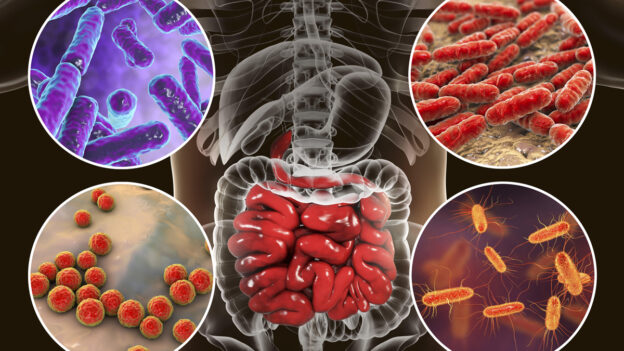
We have hundreds of trillions of microbes in our colons. We hope there is more good than bad, but oftentimes there is: too much bad, not enough good, or both. Sometimes there is a pathogenic overgrowth or they migrate up to our small intestine where they don’t belong and wreak havoc (SIBO).
Dysbiosis is the word for any of these imbalances and it causes all types of reactions to all types of foods. It can be confusing because it isn’t clear which foods; it isn’t consistently a certain food. That is because it isn’t the food. It is the microbiome imbalance.
Digestive insufficiency:
We need stomach acid, enzymes, and bile to digest our food. For a number of possible reasons (antacid medication, aging, digestive dysfunction, microbe interference) we often don’t have enough of one or more of these. And that causes indigestion, heartburn, bloating… all in reaction to food.
Motility issues:
Food moves through our digestive tract. It needs to move not too fast that we don’t digest and absorb, but not so slow that we feel sick or have trouble processing. We need our stomach to empty at the right rate, our food to move through our small intestine at the right rate and so on. Many people have trouble in this area for a variety of reasons.
Leaky Gut:
This is a buzz word for a real thing: increased intestinal permeability. The integrity of the lining of our intestinal wall makes all the difference in whether we feel good or whether we react to foods.
Immune imbalance or dysregulation:
If our immune system is overactive (perhaps because of leaky gut) we will react to foods that should otherwise be safe.
Food sensitivities:
Sometimes it is food. Gluten and dairy are the most common food sensitivities. A sensitivity is similar in some ways to an allergy (and different in other ways), in that the immune system sees and responds to the protein of a food as if it is a threat. Sometimes this is temporary in the case of some of the bullets above.
Other times we truly can’t eat gluten anymore (like an allergy).
This is not the first, in fact there are many studies showing Magnesium’s positive effect on the brain and cognition. Often times the benefits of Magnesium are compounded with Vitamin D or other nutrients. This is why I recommend everyone take a Magnesium in addition to a multivitamin.
You should make sure your Magnesium is in the forms of Magnesium Glycinate or Magnesium Threonate and that it is from a professional grade company (clean and quality assured), such as these in my Full Script store.
For over a decade, scientific research investigating noncommunicable diseases have demonstrated a commonality among seemingly disparate pathologies. What could heart disease, Alzheimer’s, autoimmune disorders, depression, arthritis, and irritable bowel syndrome all have in common? Despite the many differences between each condition, the evidence continues to suggest a key marker appearing in each: biochemical signs of inflammation.
In the human body, the inflammatory process is the natural immune activation that occurs when there is a potential threat–whether that be a wound that needs clotting, a bone that needs healing, or a potential invader that needs to be neutralized. These states of inflammation are healthy and necessary to life. But they also, importantly, are temporary. In fact, there are key cellular signals, including a class of molecules called pro-resolving mediators–that initiate the resolution of inflammation so that the immune response not only brings its heightened activity to a close, but also returns to normal function. However, what science now shows is that sustained states of inflammation are not as functional or benign as naturally occurring inflammation that arises and resolves. The continually elevated immune activity is causing what’s now often deemed “chronic low-grade inflammation,” and markers of its existence are showing themselves to be a risk factor, or component of, many conditions that were previously thought to be unrelated.
The inflammatory process itself is a cascade of biochemical activity involving an array of cell types and molecules, and it can unfold in regions all around the body.
Cardinal signs of inflammation include:
Redness
Swelling
Pain
Heat
This is easy to visualize when we think of a burn that we might incur on our finger while cooking dinner, or as a dramatic example, the shocking sight of our own knee after an orthopedic surgery. What’s more challenging to visualize, and research, is the inflammation that can occur within the body over long periods of time.
Yet, the same biochemical processes have been detected in these less visible regions.
The redness associated with inflammation is due to dilated arteries allowing increased blood flow to the site of damage.
Swelling arises once endothelial cells (flat cells that line the continuous sheet of tissue wrapping around blood vessels and body compartments) have leaked protein and water at the site.
Immune cells are activated to inflame the site.
Modern research investigating these processes have detected specific signals–molecules, that can communicate to the immune cells–that are secreted at these sites and then promote the inflammatory cascade. As it turns out, these cascades can unfold anywhere in the body because immune cells not only circulate in the blood, but also take residency in tissues and organs themselves. Evolutionarily, these abilities are incredibly beneficial. Modern humans evolved to have hyper-active immune systems, an ability to store surplus energy (fat tissue), and blood that’s quick to coagulate upon insult.
With these ancient processes underpinning much of human immune activity, the inflammatory connection between modern noncommunicable diseases makes sense. But what’s triggering these unrelenting inflammatory cascades?
Part of the answer to that question is a second question: what is even older than the immune system?
Metabolism.
As it turns out, protecting the cell (immunity) is an ancient system. But using energy to fuel cellular activity (metabolism) is even older.
One of the major biological stressors of modern life is the frequent onslaught of nutrition into the gastrointestinal tract. Food, and all of the compounds that arrive with it, is the outside world. Every time a human being eats, it’s a stimulating process not only for the organs involved in digestion and absorption, but also for the immune system. Importantly, approximately 70% of the immune system is housed within the gastrointestinal tract, and it must conduct surveillance at each meal of all food consumed. At every eating opportunity there is a complex interaction between the host immune system and the environment.
Not only is frequent eating associated with increased immune activity, but the food itself is dramatically different from what humans evolved to consume. One of the signatures of the modern food environment is the processed, hyper-palatable meals and food products that are now cornerstones of daily living.
Modern human G.I. tracts are coping with:
Refined grains
Alcohol
Sugar
Hydrogenated oils
Emulsifiers
Preservatives
These not only can cause acute damage during the digestive process, but it perpetuates the low-grade immune activity that can’t resolve–because the offending agent appears three, four, or even five times a day.
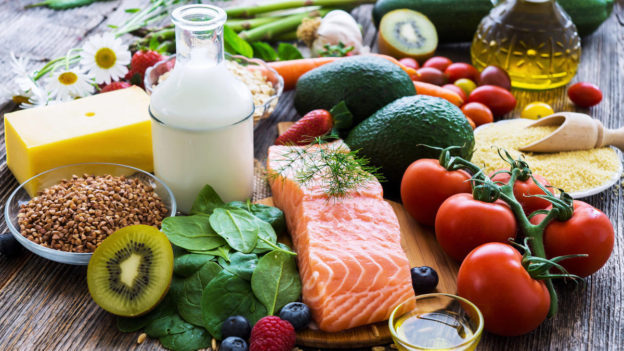
Fortunately, there is an antidote to this prevalent issue. As it turns out, one of the most powerful tools to reduce inflammation is also food. Recent evidence has found there to be strong associations between a healthy diet–like the Mediterranean diet–and reduced systemic inflammation. A healthy, anti-inflammatory diet can promote a reduction in fat mass, which has some anti-inflammatory effects on its own, help calm inflammation from powerful molecules in the food itself, and reduce inflammation because the meals contain few irritants.
Benefits from an anti-inflammatory diet include:
Whole food sources like leafy greens, vegetables, fruits, lean proteins, and healthy fats all have properties that provide the body with amino acids, antioxidants, polyphenols, and other phytonutrient compounds that can neutralize free radicals, quell inflammation, and promote healing.
Complex carbohydrates like fruits, potatoes, vegetables, and winter squashes are wrapped in a fiber matrix that has been shown to feed the microbiome–the microbial environment in the human colon.
Feeding these colonies with diverse fuel sources has been associated with increased diversity in the microbiome, which tends to have systemic anti-inflammatory and immune-supportive effects.
When paired with lean proteins and healthy fats like avocado and olive oil, the entire meal provides an array of benefits that help support healthy immune function in the G.I. tract as well as intestinal integrity, fullness, and satisfaction. Additional functional foods, such as probiotic items like kefir and sauerkraut, can also be included to support diversity in the microbiome plus offer beneficial compounds they contain called postbiotics. These bioactive chemicals, like polyphenols, short chain fatty acids, and enzymes, appear to help support the immune system and decrease inflammatory responses.
In contrast to the processed foods that can impair tight junctions, trigger immune responses, and promote potential leaking in the gut, these whole food sources are an example of the natural relationship between environment and host. Thoughtfully tailoring the diet to include predominantly anti-inflammatory, whole foods is a critical component of promoting long-term health not only in the gastrointestinal tract but in the whole body.